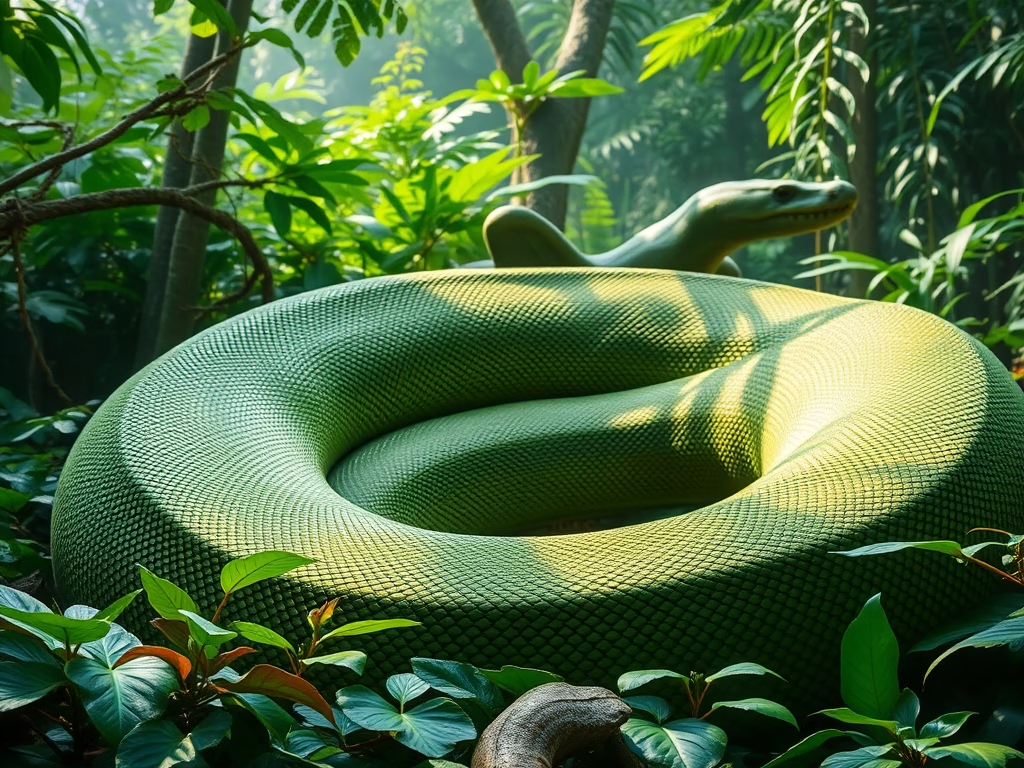
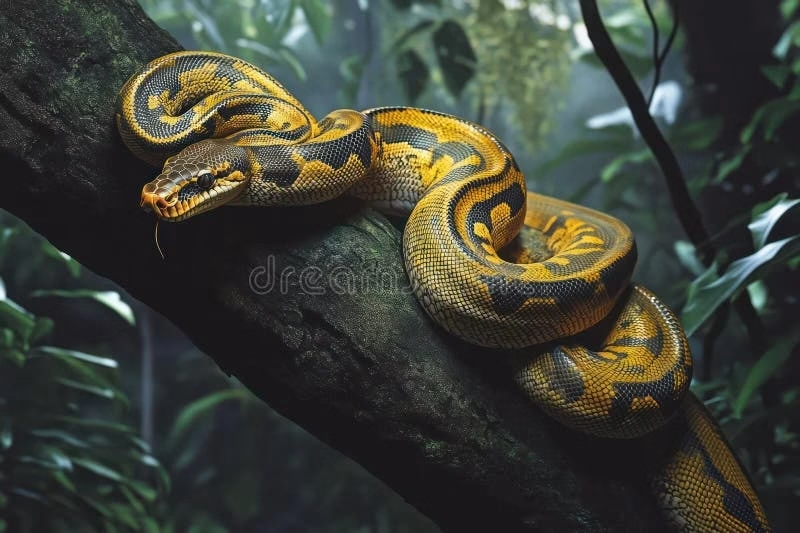
The largest snakes in the world showcase nature’s incredible size spectrum, from tiny thread-like species barely 4 inches (10 cm) long to massive pythons stretching over 30 feet (9 meters). While the green anaconda holds the title for the heaviest living snake—often exceeding 250 kilograms—the reticulated python is generally considered the world’s longest snake, with the record-holder “Medusa” officially measuring 25 feet 2 inches (7.67 meters) long.
However, these impressive modern giants pale in comparison to their prehistoric ancestors. The extinct Titanoboa cerrejonensis reached astonishing lengths of around 42 feet (13 meters) and weighed over 2,500 pounds (1,135 kilograms), making it the largest snake known to have existed until recently. In fact, a newly discovered species called Vasuki indicus may have been even larger—potentially 6.5 feet (2 meters) longer than Titanoboa.
In this comprehensive guide, we’ll explore the top 10 largest snakes in the world, examining both living species like the massive reticulated python and green anaconda, as well as extinct giants that once ruled prehistoric landscapes. We’ll also share expert insights on how these remarkable serpents evolved to such impressive sizes and what challenges scientists face when verifying snake measurements.
What Makes a Snake One of the Largest?
Determining which serpents qualify as the largest snakes involves more complex factors than simply pulling out a measuring tape. The scientific community faces unique challenges in establishing accurate measurements, especially considering that size records for massive serpents are often exaggerated in popular accounts.
How scientists measure snake size
Measuring the world’s largest snakes presents significant challenges due to their anatomy. Snake bodies contain numerous synovial intervertebral joints that allow flexion, limited extension, and compression. This unique structure means a snake doesn’t actually maintain a consistent length—its size literally changes moment by moment as muscles contract and relax. Furthermore, traditional measurement methods have notable limitations. Tape measures and rulers require snakes to be held straight by multiple people, while the most accurate technique involves using string or yarn to trace the snake’s body contours. Digital technology has emerged as a promising solution, with software that can digitally measure snakes from photographs using reference objects of known size.
The role of habitat and climate
Climate significantly influences how large snakes grow. As ectotherms, snakes rely entirely on their environment for thermoregulation. Consequently, climate change presents particular challenges, with studies showing that prolonged warmer temperatures may lead to faster growth but, surprisingly, smaller body sizes in some species. Habitat type also plays a crucial role—reticulated pythons, for example, show different habitat preferences depending on location, ranging from pristine forests in Myanmar to sewers in Singapore and parts of Indonesia.
Why some snakes grow larger than others
Several factors determine why certain snakes outgrow others. Sexual dimorphism is significant—male indigo snakes typically reach much larger sizes than females but take longer to achieve maximum growth. Diet and food availability are primary contributors to growth rates, alongside adequate temperatures and stress levels. Captive snakes often weigh more than their wild counterparts due to abundant food and reduced activity. Interestingly, scientists have observed that reintroduced snakes sometimes reach their maximum size faster than either captive or wild populations, possibly due to reduced competition or benefits from early captive care. Genetic inheritance from parents ultimately establishes the general size potential, making lineage a key determinant in how large a snake can potentially grow.
Top 8 Largest Snakes in the World (Living Species)
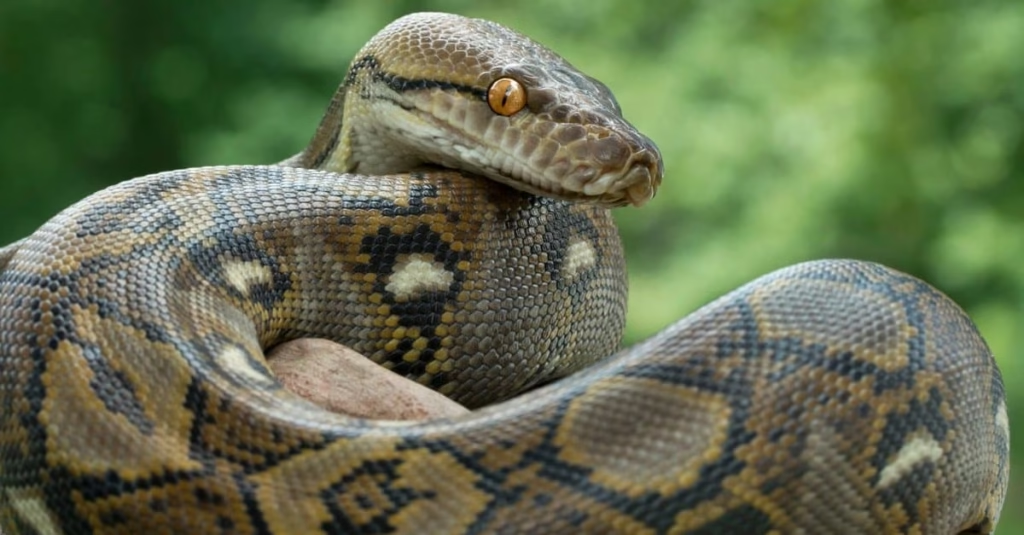
Image Source: A-Z Animals
From steamy rainforests to arid savannas, these eight massive serpents dominate their ecosystems through sheer size. Each represents nature’s remarkable engineering of predators perfectly adapted to their environments.
1. Reticulated Python
The reticulated python (Malayopython reticulatus) holds the title of world’s longest snake. The largest scientifically measured wild specimen reached nearly 7 meters (22 feet 10 inches) and weighed 59 kg (130 pounds). In captivity, a python named “Medusa” stretched an impressive 7.67 meters (25 feet 2 inches) and weighed 158.8 kg (350 pounds). These pythons typically grow between 3-6.5 meters with average weights ranging from 75-170 kg.
2. Green Anaconda
Despite being shorter than reticulated pythons, green anacondas (Eunectes murinus) claim the crown as the world’s heaviest snakes. The largest reliably documented specimen measured 5.21 meters (17 feet 1 inch) and weighed 97.5 kg (215 pounds). According to National Geographic, these massive constrictors can reach weights exceeding 227 kg (500 pounds). Primarily found throughout South America, they thrive in aquatic environments where their impressive bulk helps them overpower prey.
3. Burmese Python
Native to Southeast Asia, Burmese pythons (Python bivittatus) typically grow 3-5 meters (10-16 feet) long. The current record-holder measured 5.79 meters (19 feet) when captured in Florida’s Big Cypress National Preserve in 2023. Notably, a famous captive specimen named “Baby” weighed an extraordinary 182.8 kg (403 pounds) – heavier than any wild snake ever measured.
4. African Rock Python
Africa’s largest serpent, the Central African rock python (Python sebae) regularly reaches 3-3.53 meters (10-11.5 feet). Exceptionally large specimens may exceed 4.8 meters (15.9 feet) and weigh up to 91 kg (201 pounds). Reports exist of specimens reaching 7.5 meters (24.7 feet), though these remain unconfirmed by scientists.
5. Indian Python
The Indian python (Python molurus) typically grows to 3 meters (9.8 feet). The largest scientifically recorded specimen measured 4.6 meters (15.1 feet) and weighed 52 kg (114 pounds). Primarily found across the Indian subcontinent, these pythons feature distinctive markings and are considered among the world’s eight largest snake species.
6. Amethystine Python
Often called the scrub python, this species (Simalia amethistina) reaches 4 meters (13 feet) in length. Some specimens reportedly exceed 5.5 meters (18 feet), though this may result from confusion with related Australian species. They typically weigh up to 27 kg (60 pounds).
7. King Cobra (largest venomous snake)
Unlike the constrictors dominating this list, the king cobra (Ophiophagus hannah) earns its spot through lethal venom combined with impressive length. Adults typically measure 3.18-4 meters (10.4-13.1 feet). The longest documented specimen stretched 5.85 meters (19.2 feet). Their bite contains enough venom to kill an elephant.
8. Boa Constrictor
The common boa (Boa constrictor) typically reaches 2-3 meters (7-10 feet) in length. Exceptionally large females may exceed 4 meters (13 feet). Though smaller than other snakes on this list, they remain impressive predators, occasionally weighing up to 27 kg (60 pounds).
The Giants of the Past: Extinct Snakes
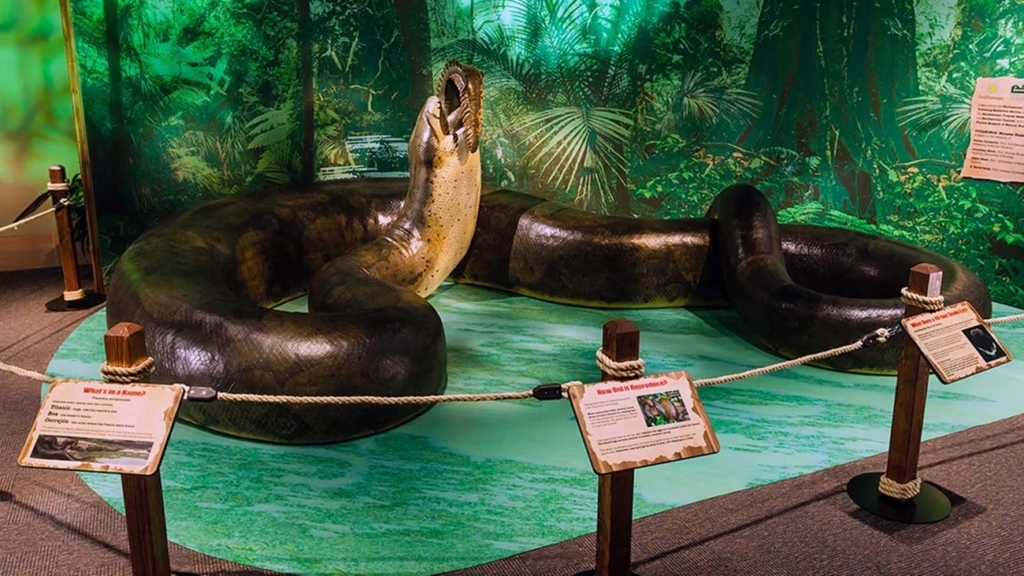
Image Source: Animals | HowStuffWorks
Long before modern serpents evolved, prehistoric giants ruled ancient ecosystems. These extinct colossi make today’s largest snakes look positively miniature by comparison.
Titanoboa: The prehistoric titan
Following the dinosaurs’ extinction, Titanoboa cerrejonensis emerged as Earth’s dominant predator approximately 60 million years ago. This colossal serpent measured between 12.8-14.6 meters (42-47 feet) long and weighed an astonishing 1,135 kg (2,500 pounds). Discovered in Colombia’s Cerrejón coal mine, Titanoboa thrived in extremely warm temperatures averaging 32–33°C. Initially thought to hunt like modern anacondas, newer skull evidence suggests it primarily consumed giant river fish.
Vasuki Indicus: The new record-holder
Described in April 2024, Vasuki indicus potentially surpasses even Titanoboa. Named after the divine Hindu serpent king, this 47-million-year-old giant was discovered in India’s Gujarat state. Based on 27 well-preserved vertebrae, scientists estimate its length between 11-15.2 meters (36-50 feet). Unlike the aquatic Titanoboa, Vasuki was likely semi-aquatic, hunting both on land and in water, preying on turtles, crocodiles, and even primitive whales[192].
Gigantophis and other ancient serpents
Gigantophis garstini held the “world’s largest snake” title for over a century until Titanoboa’s discovery in 2009. Living 40-35 million years ago, this massive predator reached approximately 9-11 meters (30-36 feet) long. First found in Algeria in 1901, additional fossils discovered in Pakistan in 2014 revealed these giants ranged across Africa, the Middle East, and parts of Asia. They preyed upon early elephant ancestors the size of tapirs.
Expert Insights on Giant Serpents
Scientific perspectives on the largest snakes reveal fascinating insights beyond mere measurements.
Why size matters in snake evolution
Size provides significant evolutionary advantages for serpents. Studies show marine snakes have larger offspring than their terrestrial relatives—averaging 44.2% longer when controlling for female body size. This adaptation likely evolved because juvenile marine snakes face higher predation risks during necessary surfacing for air. Additionally, studies of island snake populations demonstrate that when prey size increases dramatically, intense selection pressure drives rapid evolution toward larger snake size at birth.
Challenges in verifying snake size
Accurately measuring the world’s largest snakes presents considerable obstacles. Many people significantly overestimate their snake’s length—a common mistake being using shed skin, which stretches 25-33% longer than the actual snake. Proper measurement requires heavy sedation for complete relaxation. Research reveals even scientific measurements contain inherent variability—head measurements on preserved specimens show approximately half the variance of those on live, unanesthetized snakes.
What giant snakes tell us about ecosystems
Large constrictors serve as ecological indicators. Their substantial bodies make them ideal for telemetry studies tracking ecosystem health. Moreover, these impressive predators contribute to biodiversity by controlling prey populations across multiple habitats—targeting everything from small mammals to large predators including crocodilians. The recent discovery of a new anaconda species underscores their importance as indicators of ecosystem threats, particularly highlighting concerns about oil extraction pollution.
Conclusion
Giant serpents certainly rank among the most awe-inspiring creatures on our planet. Throughout this exploration of the world’s largest snakes, we’ve discovered fascinating contrasts between modern-day giants and their prehistoric ancestors. While today’s reticulated pythons can stretch beyond 25 feet and green anacondas may exceed 500 pounds, these impressive dimensions seem almost modest compared to the colossal Titanoboa and newly discovered Vasuki indicus that once dominated ancient ecosystems.
Scientists face significant challenges when accurately measuring these massive reptiles. Their unique anatomy with numerous joints allows constant length changes, making precise measurement difficult. Additionally, wild tales and exaggerations often cloud public perception of snake sizes, though advanced digital technologies now offer more reliable measurement methods.
Climate and habitat emerge as crucial factors influencing snake growth. These perfectly adapted predators evolved their impressive proportions through complex interactions between genetic inheritance, food availability, and environmental conditions. Sexual dimorphism also plays an important role, with males and females of the same species often reaching dramatically different sizes.
Beyond mere fascination with their size, giant snakes serve as valuable ecological indicators. Their presence tells us much about ecosystem health, biodiversity, and environmental threats. The recent discovery of a new anaconda species, for example, highlights concerns about pollution from oil extraction in its native habitat.
Understanding these magnificent creatures deepens our appreciation for nature’s remarkable diversity. From the mighty king cobra—the longest venomous snake—to the record-breaking pythons and anacondas that dominate their respective ecosystems, giant snakes remain powerful symbols of natural engineering at its finest. Though we may never again see serpents matching the prehistoric titans in size, the living giants that still inhabit our world continue to captivate our imagination and deserve both our respect and protection.